Tim Muehlhoff Ph.D is a professor of Communication at Biola University in California teaching on topics of conflict resolution, family communication, and gender. He is the co-director and co-host of the podcast for the Winsome Conviction Project bringing people together with differing viewpoints and reintroducing compassion and civility into conversations with opposing viewpoints. In his most recent book, Tim speaks to nature of current cultural divides resulting in cataclysmic failures in relationships today compared to past generations of opposing opinions and the problems associated with continuing on this path forward.

Up Close & Personal Interview

More videos featuring Tim Muehlhoff

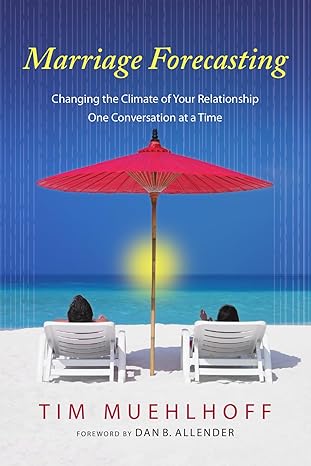
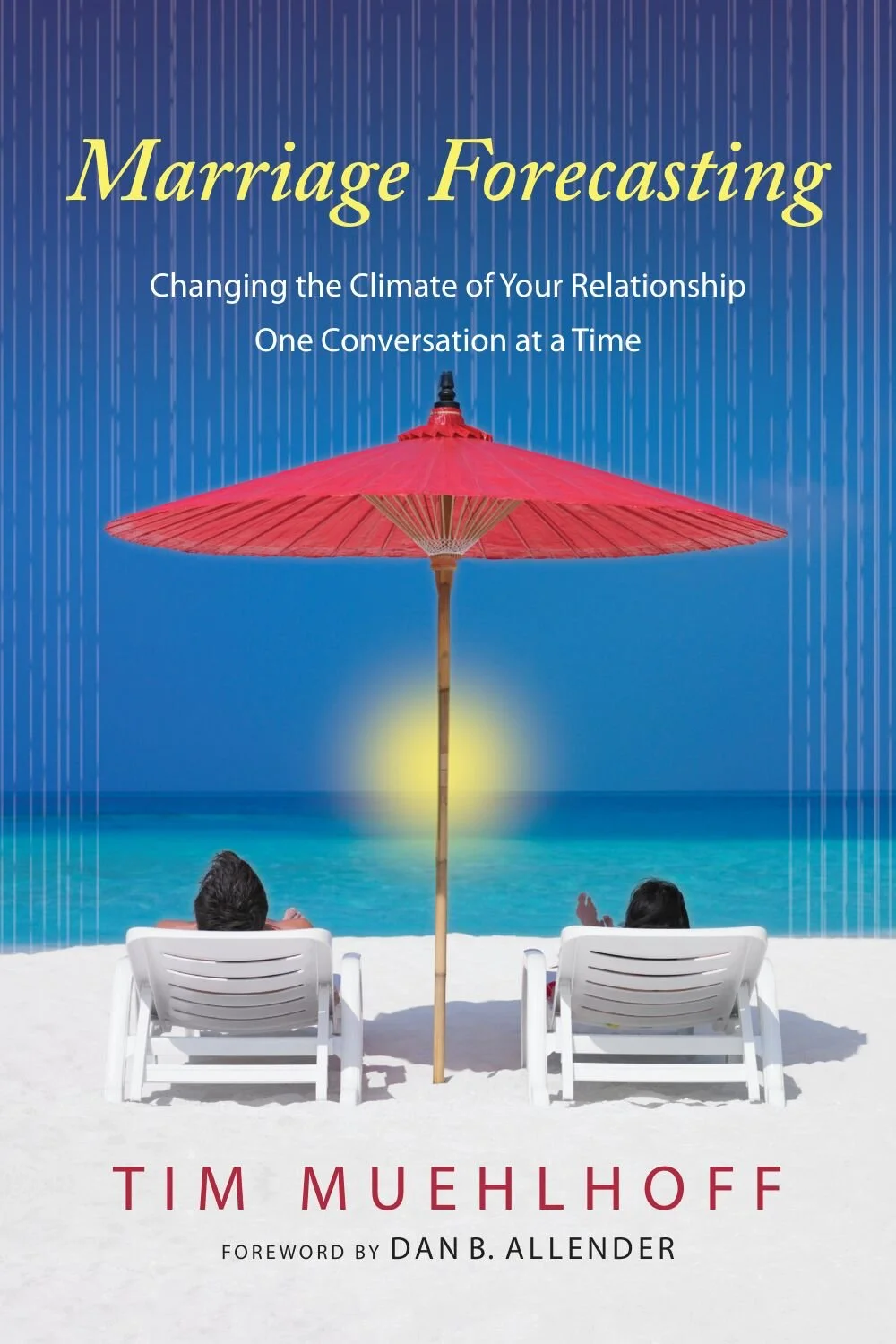
What’s the weather forecast for your marriage? That’s the question posed by Tim Muehlhoff, Ph.D., in the introduction to his book, Marriage Forecasting: Changing the Climate of Your Relationship One Conversation at a Time, published in 2010. Tim is a professor of Communication at Biola University in California where he teaches on topics of conflict resolution and family communication. He explains, “Marriages are as variable as the weather … Some are chilly and lack intimacy. Others are stormy and filled with conflict … but the communication climates within our homes can be changed – for the better.”

“Our individual words and actions always take place within an overall atmosphere of expectations,” as described on Amazon. “Without a healthy climate of trust, we are prone to miscommunication and misunderstanding. Muehlhoff shows how to take an accurate climate reading of a relationship and explains what causes climates of poor communication. With current research on marital communication, listening skills, empathy and conflict resolution, Marriage Forecasting provides practical ways for couples to rebuild a warm relational climate. Don’t just talk about the weather. Break the cold front, clear the fog, and change the extended outlook for your marriage.”

Additional Resources by: Tim Muehlhoff

Marriage Forecasting | Biola University Professor and Family Life Speaker Tim Muehlhoff Helps Couples Resolve Conflict, Addresses Spiritual Attack


What’s the weather forecast for your marriage? That’s the question posed by Tim Muehlhoff, Ph.D., in the introduction to his book, Marriage Forecasting: Changing the Climate of Your Relationship One Conversation at a Time, published in 2010. Tim is a professor of Communication at Biola University in California where he teaches on topics of conflict resolution and family communication. He explains, “Marriages are as variable as the weather … Some are chilly and lack intimacy. Others are stormy and filled with conflict … but the communication climates within our homes can be changed – for the better.”

“Our individual words and actions always take place within an overall atmosphere of expectations,” as described on Amazon. “Without a healthy climate of trust, we are prone to miscommunication and misunderstanding. Muehlhoff shows how to take an accurate climate reading of a relationship and explains what causes climates of poor communication. With current research on marital communication, listening skills, empathy and conflict resolution, Marriage Forecasting provides practical ways for couples to rebuild a warm relational climate. Don’t just talk about the weather. Break the cold front, clear the fog, and change the extended outlook for your marriage.”

Marriage Forecasting grew out of Tim’s work at the University of Chapel Hill in pursuit of his doctoral degree, which applied the conflict resolution techniques he developed for opposing groups to the martial relationship.

He initially created a four-step plan to prepare those with different perspectives to have a constructive conversation. He blended communication theory with biblical wisdom found in the book of Proverbs in his master’s thesis. He quickly realized he could not put adversaries in a room to talk about a problem and expect interaction to be productive without first improving what he terms “the climate.” Trying to talk without improving the climate is going to feel as bad as going for a run when the heat index is 130 degrees, he explained. When people are at gridlock, talking just makes things worse – it makes the argument more bitter and sends the relationship backward, not forward.

“If the climate is lacking, you have to improve it before you can get to the heart of any issue,” he said.

Tim found guidance for his theory from 1 Peter 4, “Speak truth in love. …. Be kind and compassionate to one another, forgiving each other, just as in Christ God forgave you.”

Communication happens on two levels, he said. There’s the content level and the relational level. Truth pertains to content, but love covers the relational.

What does improving the climate look like practically?

Focus on the relational level of the communication – build respect, compassion and acknowledgement, Tim said.

 “You have to establish and protect the relational level by acknowledging the other’s perspective with real consideration and empathy first. It’s a mistake just to focus on content,” he continued. If someone doesn’t feel you respect them, they will not care about what you believe. If someone doesn’t feel loved in their marriage, they won’t care what their spouse thinks.

Tim adapted his master’s theory to apply to couples for his doctoral dissertation.

He set out to improve the climate between a couple by leading them to take comfort-inducing steps:

1) Understanding – what are the expectations about the relationship, spoken and unspoken?

 2) Acknowledgement – people don’t have to agree, just listen to the other’s perspective and consider it.

3) Trust – if someone doesn’t trust the other to put their marriage first or tell the truth, the climate is compromised.

4) Commitment – is the couple committed to the marriage no matter what?

Tim created assessments to help people determine areas where their climate is lacking. These also can be used by those dating to reveal red flags: How well do you do with disagreements? he asked. How well do you acknowledge each other’s perspective? Do you give the other’s arguments weight? Can you find common ground even if you disagree? It’s important to decide if the climate between you is something you want for the rest of your life before taking further steps, he cautioned.

Tim gleans from his conflict resolution and communication research when he speaks at marriage conferences and seminars. He and his wife, Noreen, had been on staff with Cru (Campus Crusade for Christ) at Miami of Ohio University since before they were dating. They’ve been part of the speaking team for Family Life’s Weekend to Remember conferences for more than 30 years.

He noted representing a marriage ministry keeps you accountable to make sure you are practicing what you preach. He and Noreen often handle the presentation about sexual intimacy in marriage. He joked that he tells Noreen she should have married an accountant, because now she has to talk about sexual intimacy in front of 1000 people on a regular basis. He often brings the subject back to the topic of conflict, noting that when couples don’t do a good job resolving conflict, the problem will spill over into the bedroom.

When asked what he sees as the biggest challenge for marriage today, Tim noted a lack of commitment. “You need to be rock solid in commitment in Christian marriage,” he said. “People used to stay committed to a marriage even if it wasn’t a very good one. Now people say they are getting divorced for the kids. We’ve lost the theology of marriage. In a covenant marriage, your commitment is primarily to God, because its purpose is to show what God’s love is like.

“I don’t think couples understand God’s perspective to make the love of the Trinity visible through marriage. Most people buy into the ‘American Dream family’ — just have a family and be happy, be fulfilled, move up the upward mobility ladder. You’d be hard pressed to find that example in scripture.”

He also noted a lack of awareness of the presence of spiritual warfare against marriages.

“We know the evil one does not want a couple to have a godly marriage,” Tim said. “Twenty-five percent of everything Jesus said was about spiritual battle. John went even further, writing that the whole world lies in the power of the evil one. If you are trying to have a Christian marriage it is ludicrous not to make spiritual warfare part of the equation. The evil one is trying to split you apart and throw gasoline on your marriage.”

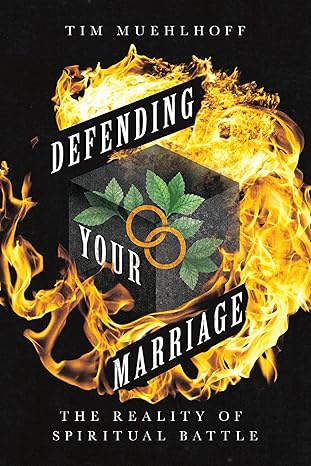
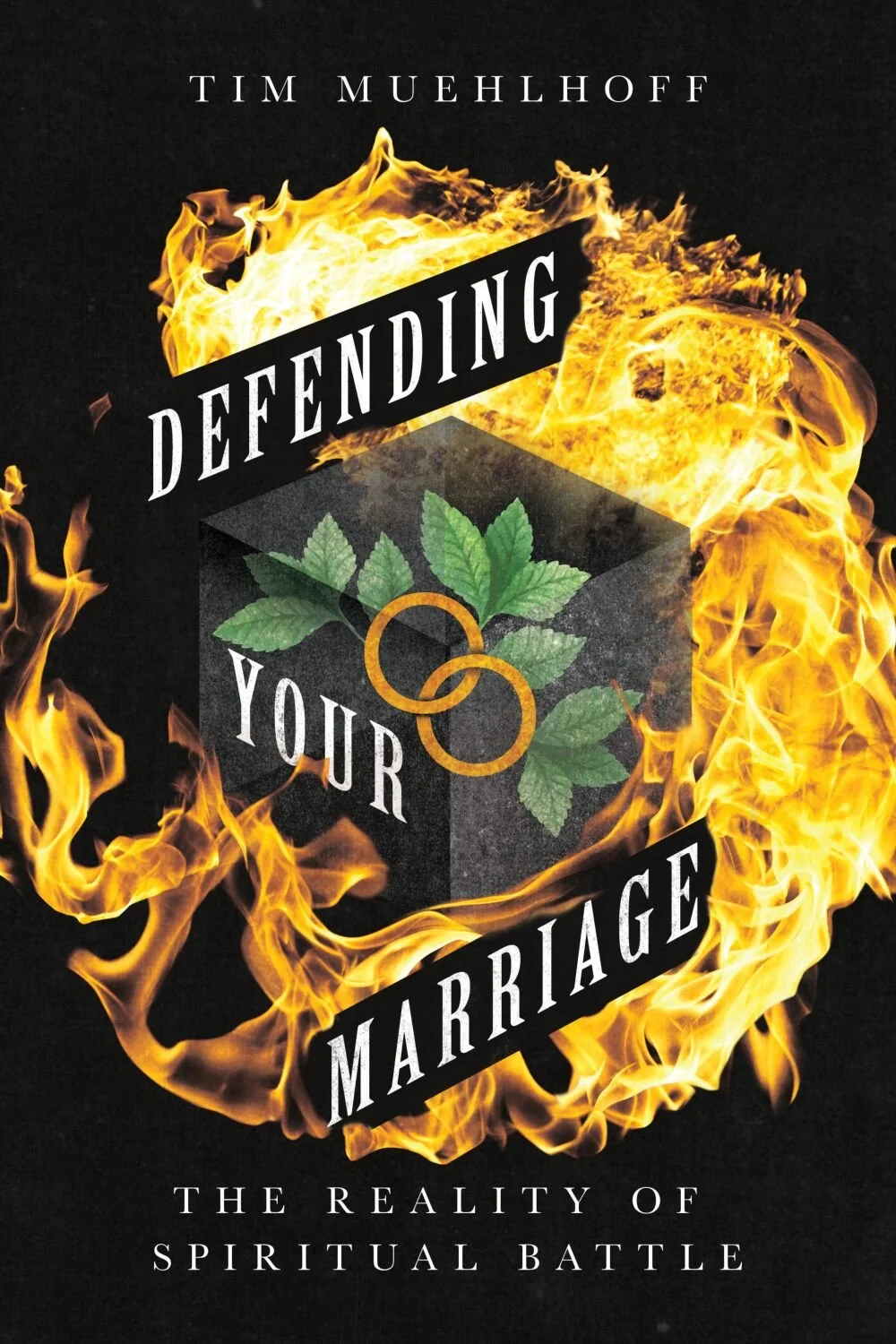
Tim wrote about this topic in Defending Your Marriage: The Reality of Spiritual Battle, published in 2018.

“Your marriage is a target,” he said in the book’s introduction. “It’s targeted because it represents a taste of heaven – God in close connection with his people. Satan wants to disrupt and oppose anything that attracts people to the loving and caring community he is working to establish on earth. By undermining marriages and driving spouses apart, Satan effectively destroys hope in the transcendent relationship to which marriages point. … If your marriage is stuck in a loop of increasingly unhealthy interactions, have you stopped to consider that you may not be dealing with the root problem? There may be spiritual dynamics at work that require spiritual intervention.”

“There are very few books about spiritual battle in marriage,” Tim said. “The church in the West is very slow to give credence to spiritual battle.” If a couple was sincerely wanting to make Christ the center of their marriage, the ancient church would have readily accepted the idea that they would be under attack. In the modern world, people are much more skeptical.

“Many couples believe there’s a devil, but that belief doesn’t show up in the way they do marriage,” he said. “Picture training for a marathon. You have the shoes, the equipment. What would happen if on the day of the race, your trainer told you that all along the race route, instead of cheering, people would be trying to trip you and throw obstacles in your path? That would change the entire race! You’d have your head on a swivel.

“Paul is as clear as he can be (in the book of Ephesians) about the adversary. Chapter five, often quoted as the expression of Christian marriage, bleeds seamlessly into getting dressed in the armor of God. He goes right from talking about marriage to spiritual battle. If you are wanting a Christian marriage, get ready for battle, for the devil’s coming after you.

“Your marriage does not exist on a romantic balcony, it exists on a spiritual battlefield,” he continued. “That’s why Paul said, ‘Do not let the sun go down on your anger or give the devil a foothold. Why do we get so frustrated with our spouses? It’s the adversary poking at us. Satan will do anything to keep us from working on our marriages.

“Most pastors don’t preach about this,” Tim continued. In preparation for writing Defending Your Marriage: The Reality of Spiritual Battle Tim read 15 books on the topic recommended by respected theologians. He only included specific signs of demonic activity for couples to guard against if they were mentioned in all 15 of the books. Found on his Power List:

  1. Uncontrollable anger that’s difficult to shake

  2. Lack of forgiveness – which is a way to give the enemy a foothold

  3. Catastrophic thinking – automatically jumping to the worst possible scenario

  4. Violent dreams

  5. Not believing the best about God

  6. No longer believing the best about yourself (shame)

He advises couples to get dressed in the armor of God together to be able to fight as a team and shore each other up.

Tim also is the co-director and co-host of the podcast for the Winsome Conviction Project that brings people with differing viewpoints together to reintroduce compassion and civility into conversations.

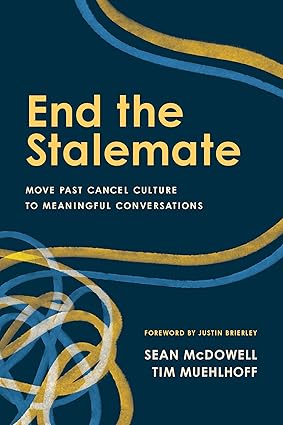
In 2024 he co-wrote End the Stalemate: Move Past Cancel Culture to Meaningful Conversations with Sean McDowell.

“We know people do not care about what you think until they know you care about them, which follows the second great commandment, ‘Love your neighbor as yourself,’” Tim said. “In the United States now we do not love our neighbors. We create tribes and only hang out with our tribe. We don’t ever hang around people who question our core beliefs.

“We think, ‘I know there are other people who disagree with me … I think they are idiots, but I never interact with them.’ Welcome to American politics and the American church.”

It all goes back to building relationships with acknowledgement, compassion and respect. “People are never going to consider your content if they feel ostracized or critiqued,” he added. “Neighbor love opens the door to hard conversations.”

When you hit an impasse, “take a truce, hit pause and build up the communication climate,” he reminded. Do the hard work of listening to the other’s stories and perspectives to reach understanding. Then seek a compromise both can agree to – a middle way.

The art of compromise has become a lost art, Tim noted. It takes heart preparation to end a stalemate.

“The scriptures talk about the heart 500 times. Jesus said, ‘The mouth speaks what the heart is full of.’ If I have a hardened heart toward you, it has to be softened.”

What’s the weather forecast of your relationship? If the climate is generally good, Tim sees much hope that couples can relatively quickly resolve conflict. And if not, he can help people learn how to let in the light to chase the chill away.

Written by Amy Morgan

Share this post with your friends

Subscribe to our Newsletter

Get The Latest Updates!