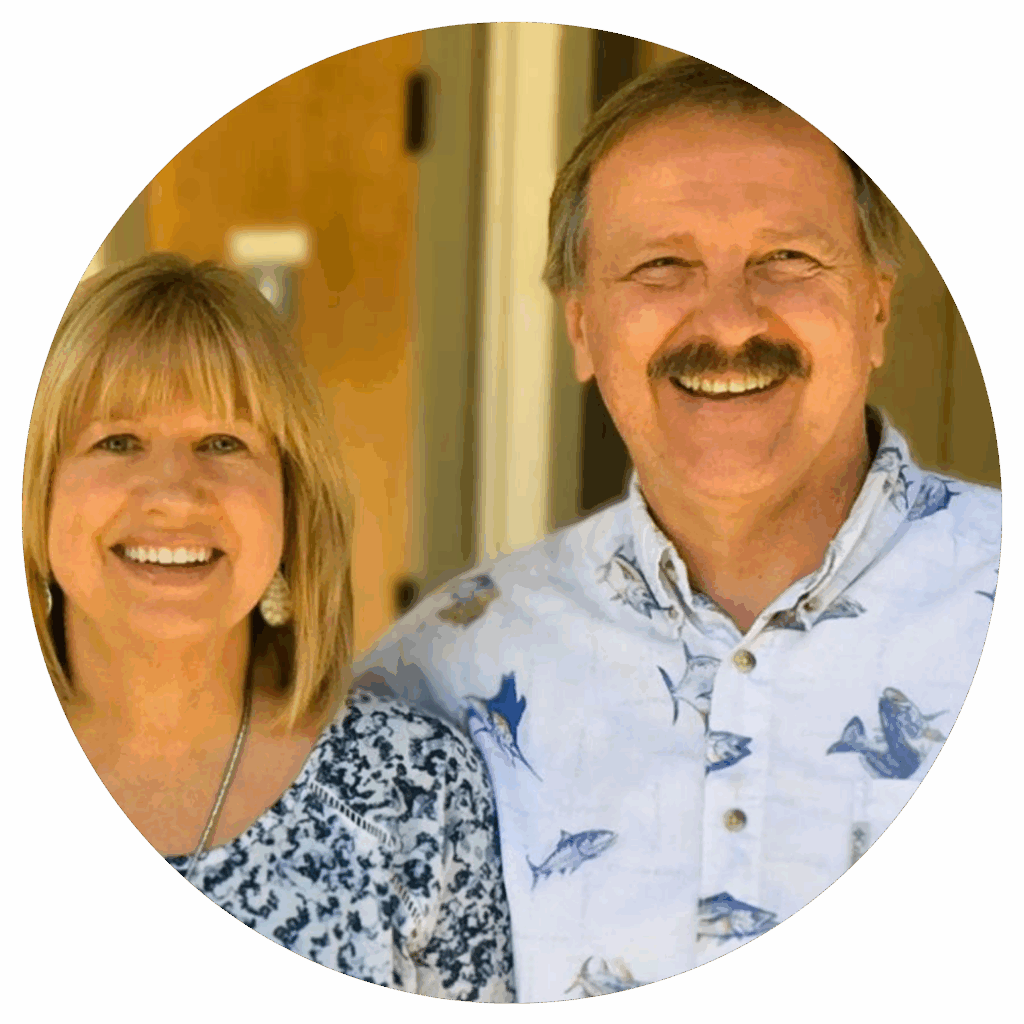
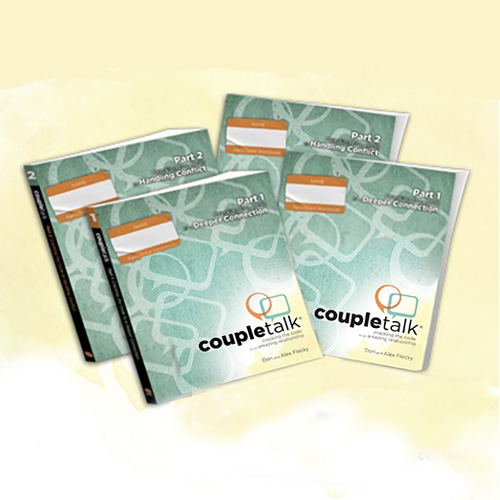
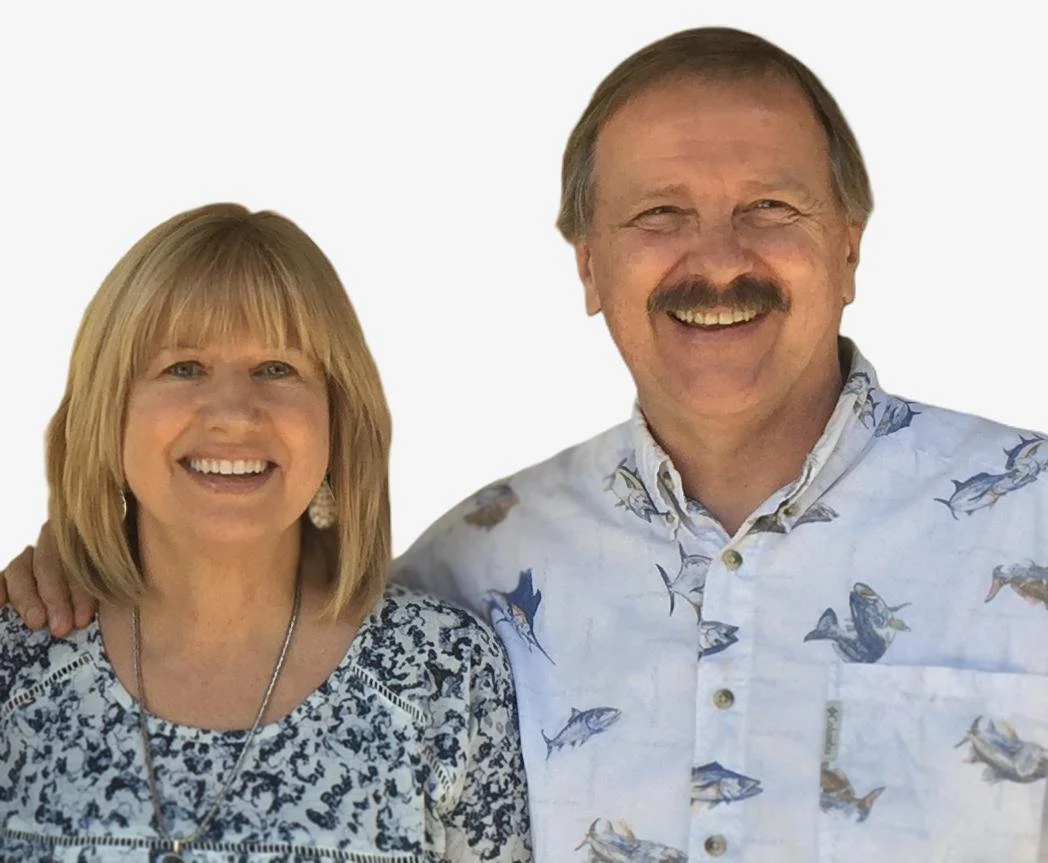
CoupleTalk – Cracking the Code to a Deeper Connection has been translated into five languages and reached thousands in 21 countries across six continents. Get Up Close and Personal with Alex and Don Flecky to learn how they brought one of the most trusted, research-proven Relationship Enhancement courses into the 21st Century, simplifying language and adding video components. Their Relationship Research Foundation offers resources that cover a continuum of relationship needs, from pre-marital Love for Life to The Third Option for couples in distress. In addition to being internationally known marriage resource leaders, Alex holds a master’s degree in communication from California State University, Fullerton, where she’s been an instructor. Don’s a licensed minister in the Evangelical Free Church of America and has been counseling men and couples since the 1980s.

Up Close & Personal Interview

More videos featuring Don & Alex Flecky

Practice makes perfect. It’s an old adage, but one that remains as true in relationships as anything else. When looking to make a lasting change in communication or conflict resolution, hearing about a skill isn’t enough. Couples need to try it, ideally with the help of a coach, before they are able to create a new habit. This experiential learning model is just one of the strengths of the successful Relationship Enhancement (RE) skills course developed in the 1970s by Dr. Bernard Guerney.

“RE was the first structured, skills-based approach to teach couples how to strengthen their relationship through empathy, emotional expression, and effective conflict resolution – skills that could be taught by trained laypersons, not just professionals,” according to the program.

Additional Resources by: Don & Alex Flecky

The Third Option

The Third Option is a skills-based program that helps participants build stronger, more fulfilling relationships. Each 14 session cycle covers a comprehensive set of topics

Read More »

Couple Talk On the Go

Receive three, free emails and/or text messages each week that will help you apply the skills and use the tools you learned from CoupleTalk. Emails Texts

Read More »

Couple Talk | Alex and Don Flecky Take Relationship Enhancement Across the Globe


Practice makes perfect. It’s an old adage, but one that remains as true in relationships as anything else. When looking to make a lasting change in communication or conflict resolution, hearing about a skill isn’t enough. Couples need to try it, ideally with the help of a coach, before they are able to create a new habit. This experiential learning model is just one of the strengths of the successful Relationship Enhancement (RE) skills course developed in the 1970s by Dr. Bernard Guerney.

“RE was the first structured, skills-based approach to teach couples how to strengthen their relationship through empathy, emotional expression, and effective conflict resolution – skills that could be taught by trained laypersons, not just professionals,” according to the program.

Alex and Don Flecky may be best known for updating RE into its newest version known as CoupleTalk. The Fleckys simplified language and incorporated tools to bring the program into the 21st century. CoupleTalk has now been translated into five languages and been used in 21 countries across six continents.

In addition to being internationally known relationship leaders, Alex has taught interpersonal communication, public speaking, critical thinking, research methods, and argumentation at California State University, Fullerton, from which she holds Speech Communication degrees. She also is co-author of an instructor’s manual for a college textbook on intercultural communication. She’s spoken at Smart Marriages, NARME, Better Marriages, American Association of Christian Counselors, BIOLA University Apologetics Conference, and Orange County Department of Education.

Not to be outdone, Don is a licensed minister in the Evangelical Free Church of America (EFCA) and has a counseling practice for in-person and online clients at DonFlecky.com.

He has worked with men and couples as a peer counselor since the 1980s and has launched programs for couples in crisis.

They also head up the Relationship Research Foundation, Inc., a non-profit organization that takes proven relationship-strengthening techniques and creates innovative resources to help today’s couples improve their marriages. Programs available on the Foundation’s website, UsRelationships.org, cover a continuum of relationship needs, from pre-marital to distress.

Despite their august credentials, the Fleckys’ ministry started with one small step. Their Fullerton Free Church started a lay peer counseling program in the 1980s, and Alex encouraged Don to volunteer to meet with men. That program branched into a couples’ communication program, for which Don was recruited to serve as a skills coach. He proved so effective the therapist asked him to take over the class in the early 1990s.

Alex had returned to school to pursue graduate work in communication studies. Don’s couples’ classes offered handy subjects for her research.  Despite her initial reluctance to actively participate as a coach, eventually Alex grew into leading alongside Don.

In 2005, The Fleckys crossed paths with Dennis Stoica, who invited them to learn the Relationship Enhancement program he was introducing to Orange County. They were impressed by the RE curriculum that was the most highly rated among 23 marriage and relationship education programs in a cross-site curriculum study, Don said. The Fleckys were allowed to take the RE course at no cost if they agreed to teach it afterward.

They brought the class to Fullerton Free Church in 2005 and began adding scripture references and applications for their church audience. The RE team realized the potential for a Christian audience and asked the Fleckys to create a Christian version and make some additional changes that would make the program more relevant and user friendly. The result is what is now known as CoupleTalk, with both a Christian and a Universal version for secular audiences not using faith-based content.

CoupleTalk contains two parts, with two goals, the Fleckys explain on their website. “In Part 1: Cracking the Code to a Deeper Connection, you will learn – and use – healthy communication tools to get more connected with your partner, to feel more understood, and to continue growing closer. During the five video sessions, you will have conversations with your partner using the practical CoupleTalk communication skills, while talking about fun topics that you choose.”

“In Part 2: Cracking the Code to Handling Conflict, you’ll build on what you learned in Part 1, to tackle those nagging issues (even the issue of nagging!). You will learn – and use – practical tools to manage disagreements, handle strong emotions, and repair your relationship when it’s been damaged. During the five video sessions, you will learn to work through a conflict from “start” (approaching your partner) to “finish” (practical solutions that satisfy both). As a result of CoupleTalk, you’ll have better communication, will feel closer to each other, and be able to resolve conflict faster!”

CoupleTalk is based on an experiential program model. “The most important thing for changing habits is practice,” Alex said. When she was teaching her first university class, she was startled to realize she was required to plan for her students to spend 40% of their class time practicing skills.

The Fleckys also addressed the challenge of equipping teachers. “RE’s trained facilitator model required attendance at a weekend training class to be authorized to teach,” Don said. “It was a big challenge to recruit enough teachers.” The new “teach out of the box” video-led curriculum took the trained facilitator out of the equation.

Alex consulted with a CSUF Distance Education professor colleague to help them ensure the new video curriculum would be effective and engaging. One of the suggestions they incorporated was an on-video countdown clock that helps couples time how long to practice each exercise. The Fleckys teach each concept, demonstrate its application, then the countdown clock ticks down while the couple practices. Now, in part due to the flexible video components, CoupleTalk can be delivered in group classes, retreats, individual coaching, online, or accessed by a couple in their own home.

After viewing the online version of CoupleTalk, people who enjoy teaching in person requested material that would allow them to lead a live group, so Alex and Don created a Power Point slide presentation that supports the well-structured workbook to meet their needs. Couples, counselors, pastors and hosts will find everything to get started at coupletalk.com.

Twice a year Don and Alex teach a live CoupleTalk class on Zoom, a practice they started during the pandemic. These typically serve 15 to 20 couples and incorporate a host to manage breakout room dynamics. During the practice time, coaches like Alex and Don can pop into a couple’s private breakout room to help them as they learn to apply new skills.

As their work with couples became more time consuming, the Fleckys were given an unexpected gift. In 2008, Don’s long-time childhood friend and business partner volunteered to take over operation of their construction company and continue to share profits with the Fleckys while they concentrated on the marriage work. Because of his generosity, “I have the amazing liberty to do this work full-time for so many years,” Don said. He also was able to obtain a minister’s license from the Evangelical Free Church of America. The Fleckys served on staff as Directors of Marriage Ministry at Fullerton Free Church for eight years, a position they count as an “amazing experience,” Alex said.

The Third Option: 15 Years and Counting

In 2010 the Fleckys were hired by Healthy Relationships California to implement a program called The Third Option to help couples in distress. The very successful program continues to reach approximately 80 people a week. When the federal grant money ended in 2014, The Third Option was so beloved it became self-funded by donations and staffed by volunteers. The in-person class meets at Fullerton Free Church, but people worldwide can access the program via Zoom. The Third Option has been going strong for 15 years. The structure of The Third Option is group support. The evenings offer a “back from the brink” testimonial and teach a relationship skill. Participants are given the opportunity to sign up for free emails and texts to remind them to practice the new skills. “Each 14-session cycle covers a comprehensive set of topics (one topic each week) that people can use to develop better understanding, sensitivity and trust while also learning more effective speaking and listening skills,” according to the program.
  • Building a Climate of Respect

  • Ending the Blame Game

  • Understanding Expectations

  • Redefining the Power Struggle

  • Coping with Control Issues

  • Listening Beyond the Words

  • Appreciating Personality Differences

  • Handling Anger Constructively

  • Speaking the Truth in Love

  • Learning How to Fight Fair

  • Breaking the Hurt Spiral

  • Forgiveness and Repair

  • Rebuilding Trust

  • Recognizing Childhood and Emotional Baggage

The Third Option continually cycles through a relationship skill every Tuesday evening. One of the benefits of this rotation is that help for those in distress is at most just a few days away. People are not kept waiting for months until their church is ready to start a new marriage class, Alex noted. Couples are not required to attend together. Often one spouse will come, even though the other already has a foot out of the door. They’ll receive support and learn some healthy relationship skills. It’s not uncommon for the other spouse to notice sincere change and agree later to join the class.

Alex remembered an orientation group leader whose husband has never shown up to class. Despite attending alone, she believes The Third Option has saved her marriage. Alex also noted another husband and wife who now sit so close together there is no space between them. But the first week they came, they sat on opposite sides of the room and didn’t want to be in the same discussion group. Over the weeks and months, they kept moving closer together. Eventually, the wife became pregnant with what they call their TTO (The Third Option) baby, Alex added.

Volunteers are passionate about their faith and helping others. Even though The Third Option is a light touch when it comes to faith, couples often mention it in their “back from the brink” story, Don added. Many come to faith as leaders describe a God who is not going to abandon them.

“People who grew up in broken or dysfunctional homes don’t know how to do healthy relationships,” Don added. The Third Option can fill the gap. It offers simple, clear basic content. Don and Alex often share their own testimony of their difficult first years of marriage or, as they describe, when “everything blew up,” and how they came through it.

The Fleckys explain they had two years of beautiful Christian courtship that crashed once they married. “Don became the enemy the day after we got married,” Alex said. “That’s what I had seen growing up, so I re-enacted it.” And Don brought his own bad habit of avoidance from his family of origin. “I knew I was stuck with this person, because I was not going to get a divorce,” Don said, but they spent the first few months fighting and miserable.

Things started to shift when Don told Alex, “I’m not leaving, but we are not going to do this dance for the rest of our lives.” “The key was him saying, ‘I’m not going anywhere. We are going to have to work this out.’ That bit of hope changed me,” Alex added.

“Getting the hope back was key. I had the bad stuff so deeply ingrained in me. I had to make a choice to speak skillfully, recognize that our cycle was harmful and learn how to face things I didn’t want to face. Our dynamics didn’t immediately get good. It took years of growing and learning. We had no idea God was going to use this terrible time in our own relationship to encourage thousands of couples. That story has gone all around the world.”

“We try to be transparent about our own dumb things to normalize the fact that all couples have struggles,” Don said. “Telling our story offers others hope. People can see they are not the only ones, that their situation isn’t un-fixable, they are just going through a tough time.”

People “get a little shocked” when Don tells them he once thought he had made the biggest mistake of his life in marrying Alex. “But now the real truth,” he said, “is if we had divorced, THAT would have been the biggest mistake of my life. We would have missed out on so much – a wonderful marriage, closeness and commitment, and the ministry we’ve had to encourage so many other people with our story.”


No relationship enhancement program would be complete without including a component to help pre-married couples start well. The Fleckys created the Love for Life faith-based pre-marriage education class that emphasizes learning skills similar to those found in CoupleTalk and The Third Option. Alex and Don teach six sessions live on Zoom, then couples connect with a trained facilitator who will spend three more sessions coaching them through a personal interpretation of their SYMBIS assessment.

“So few people do pre-marital preparation,” Alex lamented. “According to Les and Leslie Parrott (creators of SYMBIS), pre-marital preparation reduces divorce by 31%. Alex and Don hope coaches and couples will bond, so that later when the newly married couple hits one of life’s inevitable speedbumps, they have their coaches to reach out to for help.

Whether a couple is looking for pre-marital preparation, to learn marriage skills or needs support in distress, they will find the Fleckys’ gold-standard resources at UsRelationships.org.

Written by Amy Morgan

Share this post with your friends

Subscribe to our Newsletter

Get The Latest Updates!