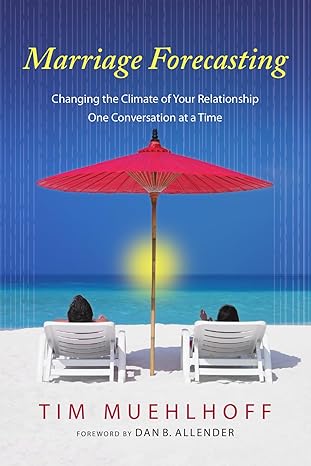
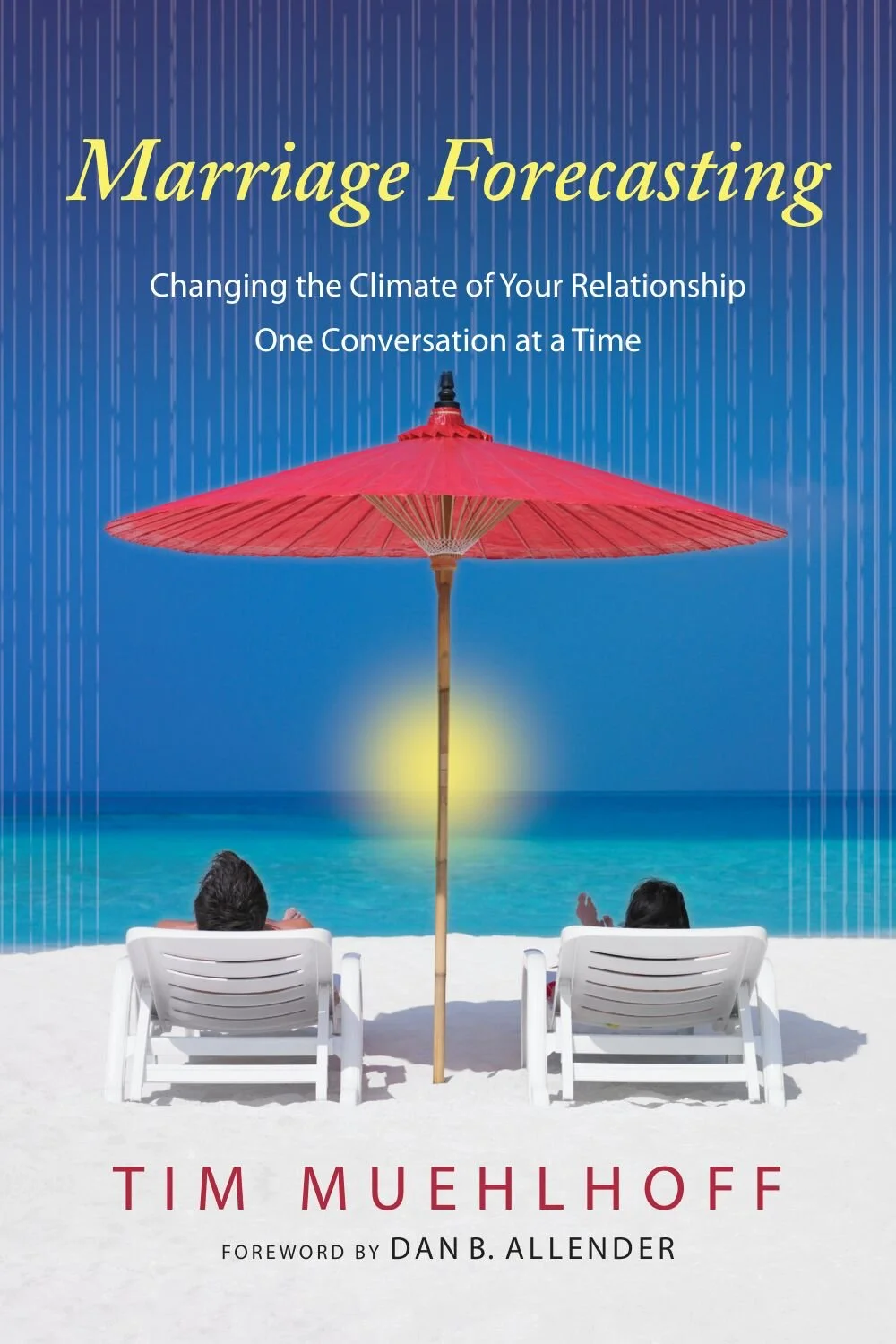
“Our individual words and actions always take place within an overall atmosphere of expectations,” as described on Amazon. “Without a healthy climate of trust, we are prone to miscommunication and misunderstanding. Muehlhoff shows how to take an accurate climate reading of a relationship and explains what causes climates of poor communication. With current research on marital communication, listening skills, empathy and conflict resolution, Marriage Forecasting provides practical ways for couples to rebuild a warm relational climate. Don’t just talk about the weather. Break the cold front, clear the fog, and change the extended outlook for your marriage.”
Marriage Forecasting grew out of Tim’s work at the University of Chapel Hill in pursuit of his doctoral degree, which applied the conflict resolution techniques he developed for opposing groups to the martial relationship.
He initially created a four-step plan to prepare those with different perspectives to have a constructive conversation. He blended communication theory with biblical wisdom found in the book of Proverbs in his master’s thesis. He quickly realized he could not put adversaries in a room to talk about a problem and expect interaction to be productive without first improving what he terms “the climate.” Trying to talk without improving the climate is going to feel as bad as going for a run when the heat index is 130 degrees, he explained. When people are at gridlock, talking just makes things worse – it makes the argument more bitter and sends the relationship backward, not forward.
“If the climate is lacking, you have to improve it before you can get to the heart of any issue,” he said.
Tim found guidance for his theory from 1 Peter 4, “Speak truth in love. …. Be kind and compassionate to one another, forgiving each other, just as in Christ God forgave you.”
Communication happens on two levels, he said. There’s the content level and the relational level. Truth pertains to content, but love covers the relational.
What does improving the climate look like practically?
Focus on the relational level of the communication – build respect, compassion and acknowledgement, Tim said.
“You have to establish and protect the relational level by acknowledging the other’s perspective with real consideration and empathy first. It’s a mistake just to focus on content,” he continued. If someone doesn’t feel you respect them, they will not care about what you believe. If someone doesn’t feel loved in their marriage, they won’t care what their spouse thinks.
Tim adapted his master’s theory to apply to couples for his doctoral dissertation.
He set out to improve the climate between a couple by leading them to take comfort-inducing steps:
1) Understanding – what are the expectations about the relationship, spoken and unspoken?
2) Acknowledgement – people don’t have to agree, just listen to the other’s perspective and consider it.
3) Trust – if someone doesn’t trust the other to put their marriage first or tell the truth, the climate is compromised.
4) Commitment – is the couple committed to the marriage no matter what?