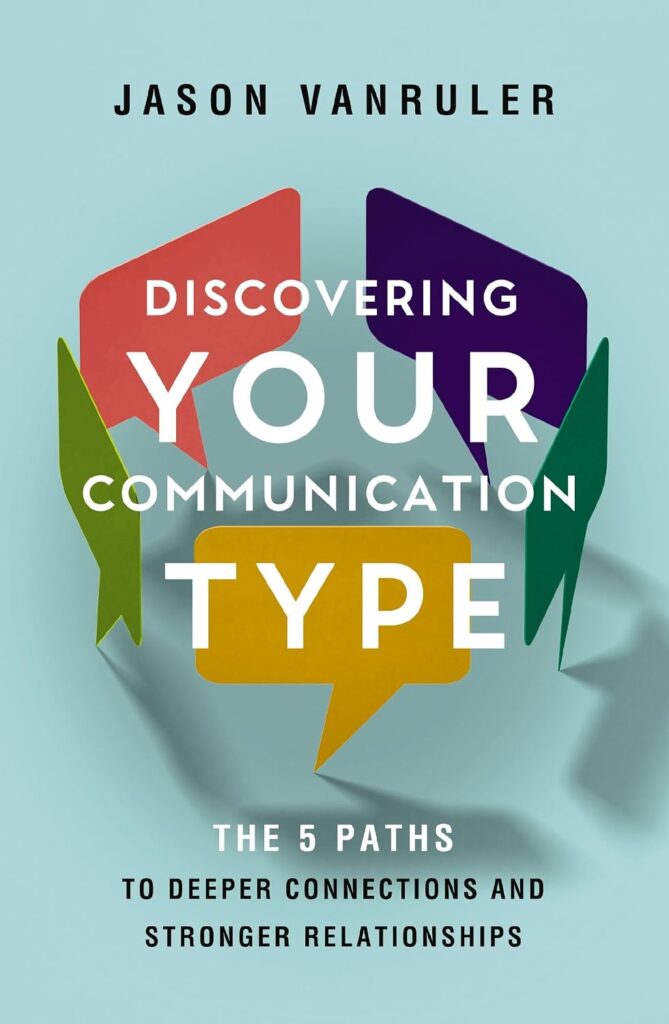
Jason VanRuler is a leadership coach, speaker, therapist and author who’s helped thousands of people untangle complications in their lives so they can live and love with integrity. In his 2026 book, Discovering Your Communication Type: The 5 Paths to Deeper Connections and Stronger Relationships, Jason explains how knowing your communication type can help you overcome communication obstacles and forge deeper connections.

Up Close & Personal Interview

More videos featuring Jason VanRuler

Do you feel like you and your spouse frequently miss what the other is trying to communicate? So many people struggle in this area. Poor communication is one of the most common concerns voiced by those seeking help. With 15 years of experience helping people learn how to express themselves in a way that truly resonates, Jason VanRuler approaches every client with compassion and empathy as he speaks truth and grace into their lives through leadership coaching, relationship building, couples therapy, or recovery from addiction or trauma. He frames his work as helping clients, “Untangle what’s complicated so you can live and love with integrity.”

Jason declared he wanted to be a psychologist who wrote books at the tender age of eight – his precocious aspiration perhaps inspired by his parents’ divorce. Although he initially took a job in the corporate world, Jason felt called to return to his original career choice after he married. He attended seminary and became a therapist with an additional master’s degree in addiction.

Additional Resources by: Jason VanRuler

The Connected Couple

Does your relationship feel like you’re just roommates – or worse, sparring partners?! Feeling disconnected, struggling to communicate well, finding yourselves in constant conflict, maybe

Read More »

PATHS Assessment

Discover Your Communication Type The five communication styles that explainwhy some conversations create connection…and others fall apart. Take the free 25-question PATHS Assessment to discover

Read More »

Communication Types | Jason VanRuler’s 5 Paths Help People Connect Deeply, Overcome Obstacles


Do you feel like you and your spouse frequently miss what the other is trying to communicate? So many people struggle in this area. Poor communication is one of the most common concerns voiced by those seeking help. With 15 years of experience helping people learn how to express themselves in a way that truly resonates, Jason VanRuler approaches every client with compassion and empathy as he speaks truth and grace into their lives through leadership coaching, relationship building, couples therapy, or recovery from addiction or trauma. He frames his work as helping clients, “Untangle what’s complicated so you can live and love with integrity.”

Jason declared he wanted to be a psychologist who wrote books at the tender age of eight – his precocious aspiration perhaps inspired by his parents’ divorce. Although he initially took a job in the corporate world, Jason felt called to return to his original career choice after he married. He attended seminary and became a therapist with an additional master’s degree in addiction. Then Jason cut his teeth counseling in the federal prison system. “I saw God in those rooms in so many ways,” he said. “I would admire the faith of a murderer, because they had nothing but God.” After that baptism of fire, no obstacle seemed as difficult. He worked in private practice with people struggling with addiction, then leadership and marriage doors kept opening as he gained expertise in stepping in where others were reluctant.

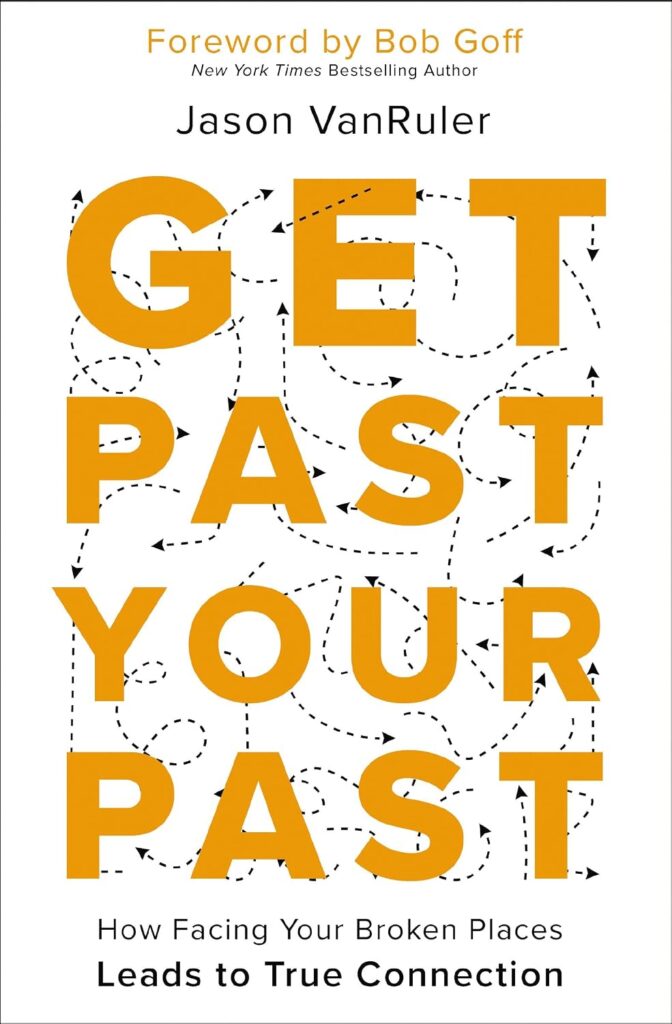
In 2020 his mentors inspired him to do “big things,” and Jason shifted his priorities toward speaking, writing and leading intensives and retreats. He subsequently published two books,

Discovering Your Communication Type: The 5 Paths to Deeper Connections and Stronger Relationships, published in 2026, which followed his 2023 Get Past Your Past.


As a therapist who works with hundreds of couples every month, Jason saw repeating patterns of interaction and disconnection. In particular, he noticed that some couples had difficulty even when they read prepared scripts to each other, while the content resonated with others. Since the scripts were the same, he realized something other than the words was at play. “Why does the script ‘sound’ different from one person with another?” he wondered.


Jason had long admired the way author Gary Chapman was able to explain the 5 Love Languages simply to make the concept relatable. Jason decided to break down communication types the same way.


“Communication isn’t just what we say; it’s also how we deliver, receive, and interpret what is said,” Jason wrote. “It’s layered with tone, timing, emotion, and context. It’s rarely straightforward and instead enigmatic…Communication is connection.”


“We all have a different ‘communication accent,’” he explained. “And we listen best in our own language.” When we struggle, we may not be speaking the other person’s communication language, nor they ours.


Jason developed the PATHS approach to explain differing communication types that incorporates elements from the Enneagram, Attachment Theory and the Big Five Personality Model. All three are widely respected, time-tested theories that describe how people grow and relate. He explains these, “Remind us that we are both psychological and spiritual beings who are wired by biology, shaped by our experiences and guided by faith.”


Using traits from each, the PATHS assessment helps people identify which of five communication types most closely describes the way they interact. As he wrote, “These patterns do not define us, but they often predict how we communicate and how we seek comfort, manage conflict and rebuild connection after rupture.” PATHS reveals how a person connects and “gives language to what occurs between us, guiding us to the place where growth, grace and genuine relationship begin.”


“The PATHS model gives you a framework for interpreting what people say and how they mean it, based on their unique path,” he wrote. It also helps people avoid stepping on someone’s core fear once they identify their style. “Your communication isn’t just about the topic at hand – it’s about preserving connection.”


In Discovering your Communication Type, he offers the assessment to help people determine if they are a Peacemaker, Thinker, Advocate, Harbor or Spark. Communication types are forged in our family of origin, so attachment and trauma become important. Someone in a high conflict family might become a Peacemaker. Those who felt marginalized or overlooked became an Advocate. Each type inherently includes strengths and weaknesses, a core fear and ways it shows up in conversations and groups. None is better or worse than the others. A person’s style was literally taught to them in their family story, Jason said. “We adapt to fit into the system for survival.”


Readers are invited to take the assessment, identify their path (and that of significant people in their lives), then see how they can set the stage for more productive conversations. When you know your path and honor somebody else’s, real connection becomes possible.  Chapters offer words to use in times of conflict, key phrases that relate to the other’s path, ways to avoid hitting triggers and/or de-railing conversations before they start and how to say and receive hard things. Other touchy topics include sharing your hurt, apologizing, setting a boundary, and saying no, as well as how to know when and when not to communicate. Jason even addresses special circumstances like relating to adult children and/or people who are uncommunicative.


“We try to help people not have more conflict than they need to,” Jason said. “Conflict is always going to be hard. If we are going to struggle, let’s make sure it’s about something that matters, and that we are going to resolve it.”


Healing doesn’t happen in isolation. It happens in relationship.

Getting healthy starts with self-awareness and leads to skill-building. Jason’s webpage, https://www.jasonvr.com, lists online courses he offers to singles or couples.

Titles include:

Overcoming Loneliness

Understanding Attachment

Understanding Emotional Maturity

Navigating Stressful Relationships

The Connected Couple

The Connected Couple encompasses seven action-oriented sessions in 90 minutes that include a short video, expert guidance, a summary and action steps.

Couples learn:

  • The building blocks of a healthy relationship

  • How to work together and not against each other

  • Communication that builds connection

  • Discover joy even in conflict

  • How to spot distractions hurting your relationship

  • The 6 types of intimacy and how to use them

Remembering a couple is on the same team is one of the course’s core concepts. “We forget that we were two people pointed in the same direction, for the same reason, walking together,” Jason said. “So many couples are busy, and they don’t know what actually makes their relationship work. They invest time in things that don’t actually matter to the relationship. It’s all about knowing your spouse and what matters to them.”


He gives an example of his wife, Jodi, who absolutely adores drinking her coffee super-hot. Most mornings he drives a mile to a favorite coffee shop, then back to the neighborhood where he finds her walking the dog. He’ll pull up beside her, roll down the window, and offer her the first few sips because the hot coffee is just how she likes it.


“Two minutes is all it takes, and it makes her day!” he said. “But to do that, you have to know your person well to know what they like and what makes them feel loved. Figure out what makes them feel loved and lean into that. You don’t have to guess.”


To help remove any guesswork, The Connected Couple course includes worksheets and questions to help couples learn more about each other. “People struggle because they don’t actually know their spouse,” Jason added. “Long-married couples have learned each other. We can help couples speed that process up to get to the good part more quickly.”


Jason enlists Jodi to help him plan the bi-annual couples’ retreats they host at resorts in Cabo San Lucas and Scottsdale. Busy couples are attracted to the opportunity to make their marriage stronger in community with other like-minded people while they have fun and relax. While Jason leads some skill-building sessions, much of the time is spent giving couples space to make memories together. Activities include hiking, pool days, devotions and a “mean pickleball tournament.”

In addition to creating a welcoming and pampering environment where it feels safe to do something different, Jason and Jodi spend time getting to know each of the 20-50 couples in advance to uniquely show up in a way that matters to them. “Jodi is masterful at creating experiences and loves to cook,” Jason said. “If a couple has a special allergy, we’ll have it set up so they never have to tell anyone.

“We look for two or three touchpoints every retreat that say, ‘We know you and see you,’” Jason added. Individual pool day totes come pre-stocked with flip flops in each guest’s size. “If I am going to ask somebody to change, I have to earn my place in their life to have a voice. People are more open to change when they are seen, when there’s a relationship in place because I paid attention,” he said.

In addition to leading groups, Jason runs a private practice. People can schedule an initial 15-minute connect call to consult with him. He’ll ask about their emotional state and how he can help. He often hears from those with recalcitrant spouses. When a spouse won’t participate, he honors the caller’s grief but asks what they will do and encourages them to, “take action on the thing they need to get better at.”


He tells those who declare their spouse won’t change or do the work that sometimes, “You have to be the role model, and there’s honor in that.” He cites Jesus’ example. “Jesus said, ‘Come with me.’ As you do good, invite your person to come along with you as you keep getting better. People feel really awkward when others are bringing their best selves, and they are not. Be your best self and see what shakes out. It might encourage them to up their game.”


Jason also offers a One Day Intensive Reset for leaders, couples, and high-capacity people navigating crisis, consequence, or major transition. He describes the Reset as “Private. Focused. Time-bound. Built for those who don’t need motivation—but do need a way forward.”

Jason tailors the goals and objectives to meet each individual need and specializes in curating an experience that matters to that person.


He’s worked with people who’ve had a moral failure or blown up their life in some way. “What you really need in those moments of chaos is someone who can be clear,” he said. “It’s easy to be distracted, but what is really the core issue? There’s always a common thread. Maybe a person doesn’t know how to ask for or meet their own needs in a healthy way. They know they have a problem, but they haven’t been willing to talk about it.”


Surprisingly, sometimes it’s when a person is at their lowest that they have the best opportunity to create the life they’ve been looking for.


He describes the Reset Intensive on the website as:


THIS IS FOR YOU IF:

  • You’re a high-capacity man whose life looks successful – but feels strained behind the scenes

  • You’re carrying secrets, shame, or patterns you don’t want defining your future

  • Your marriage, leadership, faith, or integrity falls under pressure

  • You don’t want endless therapy – but you know insight alone isn’t fixing this

  • You want to be a different kind of husband, father, or leader than the one you grew up with

  • You’re ready to face reality honestly and take responsibility for what comes next


THIS IS NOT FOR YOU IF:

  • You’re looking for quick motivation or surface-level fixes

  • You want reassurance without responsibility

  • You’re not willing to be honest with yourself

  • You’re avoiding consequences rather than addressing them

  • You’re not ready to engage with depth, clarity, and courage


Sometimes people need to start over. Jason helps them understand honestly who they are and walk toward a vision for a new future. He’s worked with busy mega-church pastors and secular executives alike who realize their work responsibilities have overshadowed relationships with their family that would have been more fulfilling.


He’ll ask what their vision is for the future and how far off they are, then they’ll formulate a plan with accountability to help them get closer to where they need to be. “Often, they don’t need more problem awareness, they need solutions,” Jason said. He helps people find what’s real and define what a way forward might look like for them.


Jason’s website also offers links to short Instagram clips and blog articles addressing timely topics like navigating holiday conversations with relatives.


“Maybe your vision is being the one who doesn’t take the bait. The one who responds instead of reacts.

Your vision might include:

  • Staying curious instead of defensive

  • Looking for the hurt beneath the harmful behavior

  • Being the first to offer grace

  • Breaking patterns with kindness

“If that sounds interesting, keep that picture in your head as you step into the room with your chaotic family.” To echo Jason’s words, “If that sounds interesting,” check out his resources at Jasonvr.com.

Written by Amy Morgan

Share this post with your friends

Subscribe to our Newsletter

Get The Latest Updates!